
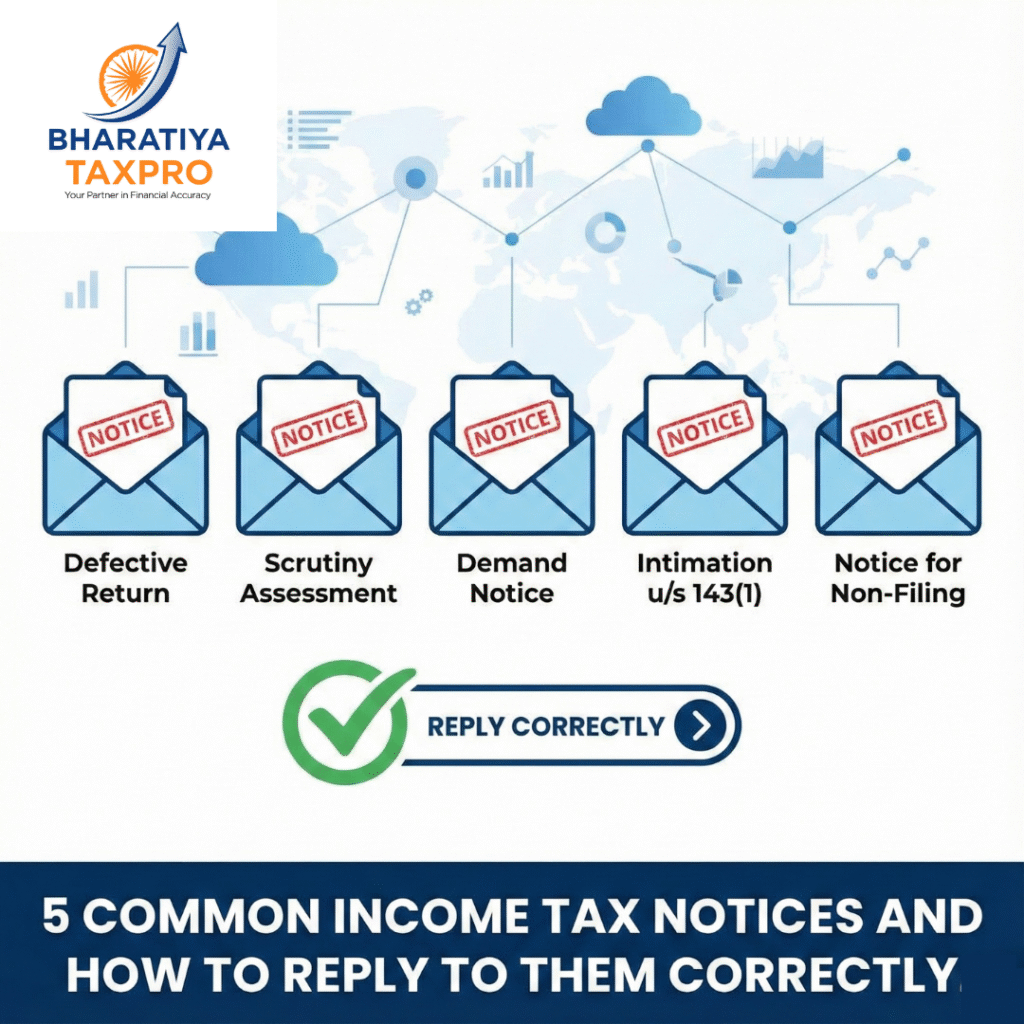
Receiving an email or SMS from the Income Tax Department can instantly spike your heart rate. The subject line usually reads something formal like “Intimation u/s 143(1)” or “Notice u/s 142(1)”, and for most people, this translates to: “I am in trouble.”
First, take a deep breath. Not every communication from the tax department is a raid or a penalty. In fact, many are just automated system checks asking for simple clarifications. However, ignoring them is dangerous.
At Bharatiya Tax Pro, we handle hundreds of these notices every year. Here is a breakdown of the five most common notices we see in Bangalore, along with precisely what you need to do about them.
1. The “Report Card”: Intimation u/s 143(1)
- What it is: This is the most common email taxpayers receive. It isn’t really a notice; it’s a receipt. It confirms that the Department has processed your return. It compares two columns: “As provided by Taxpayer” vs. “As computed by Department.”
- What to do:
- If it shows “No Demand / No Refund”: You are safe. Do nothing.
- If it shows a Refund: Great! Your money is on the way.
- If it shows a Demand (Payable): This means they found a calculation error or disallowed a deduction. Check the difference carefully. If you agree, pay the tax. If you disagree, you need to file a rectification request.
2. The “Did You Forget Something?”: Notice u/s 139(9) – Defective Return
- What it is: The Department considers your return “defective” because information is missing or inconsistent. Common reasons include using the wrong ITR form or forgetting to pay the self-assessment tax before filing.
- What to do:
- You have 15 days to fix this mistake from the date of receiving the notice.
- Log in to the portal and file a response to the defective return. If you miss the 15-day window, your original return will be treated as invalid—as if you never filed it at all!
3. The “Show Me Proof”: Notice u/s 142(1)
- What it is: This is a preliminary inquiry. The Assessing Officer (AO) or the system may require additional documents or clarification before finalising your assessment. They might ask for bank statements, proof of high-value transactions, or an explanation for an income mismatch.
- What to do:
- Do not ignore this. This requires a formal response with supporting documents uploaded to the e-filing portal.
- Drafting the reply is critical here. A weak explanation can lead to further scrutiny. It is highly recommended to have a tax professional draft this response.
4. The “Old Dues”: Intimation u/s 245
- What it is: This notice usually comes when you are expecting a refund. The Department is saying, “We see you want a refund this year, but our records show you still owe us tax from 3 years ago. We are going to adjust your refund to pay off that old debt.”
- What to do:
- Check your records immediately. Do you really owe that old tax? Often, these are system errors caused by old payments not being updated.
- You must respond online by agreeing (“Yes, adjust it“) or disagreeing (“No, that demand is incorrect”). If you don’t reply within 30 days, they will automatically cut the money from your refund.
5. The “Serious” One: Notice u/s 148 – Income Escaping Assessment
- What it is: This is the most serious notice on this list. It means the officer has reason to believe you have income that you have not reported (escaped assessment), and they want to reopen your case. This often happens if they track high-value investments or property purchases that don’t match your filed income.
- What to do:
- Seek professional help immediately. This is a legal proceeding.
- You will be asked to file a return for that specific year again. The scrutiny here is high, and penalties for under-reporting can range from 50% to 200% of the tax payable.
The Golden Rule: Timeliness is Everything
The Income Tax portal has become very strict with timelines. A response delay of even one day can result in penalties or Ex Parte orders (where they decide your tax without hearing your side).
If you have received a notice and the legal jargon is confusing you, don’t guess the answer. Bharatiya Tax Pro has been resolving complex tax disputes and notice replies for 40 years. We speak the department’s language, so you don’t have to.
Got a Notice? Let our experts tell you exactly what your next move should be.
➡️ Book your appointment by visiting our website: https://bharatiyataxpro.com/
➡️ WhatsApp: https://wa.me/+918884048888