
Starting a firm in India has always been a challenging and adventurous path. You pour your emotions, time, and life savings into a new idea. You sincerely hope it answers genuine problems and builds something sustainable.
However, the fundraising environment is much more developed in 2026. Investors are becoming significantly choosier. Fortunately, government support through strategic tax benefits remains one of the strongest pillars assisting real founders. Whether you are raising money or increasing your staff, knowing these motivations can make a huge difference.
I have spent years working with startups at all levels. For instance, I have guided pre-seed concepts scribbled on napkins and mature firms raising multi-crore rounds. One thing I see constantly is smart entrepreneurs losing sleep about taxes rather than their product. The good news is that you can use tax rules to your immense benefit. Let me tell you what genuinely works in 2026.
The Big Update: Angel Tax is Officially Dead
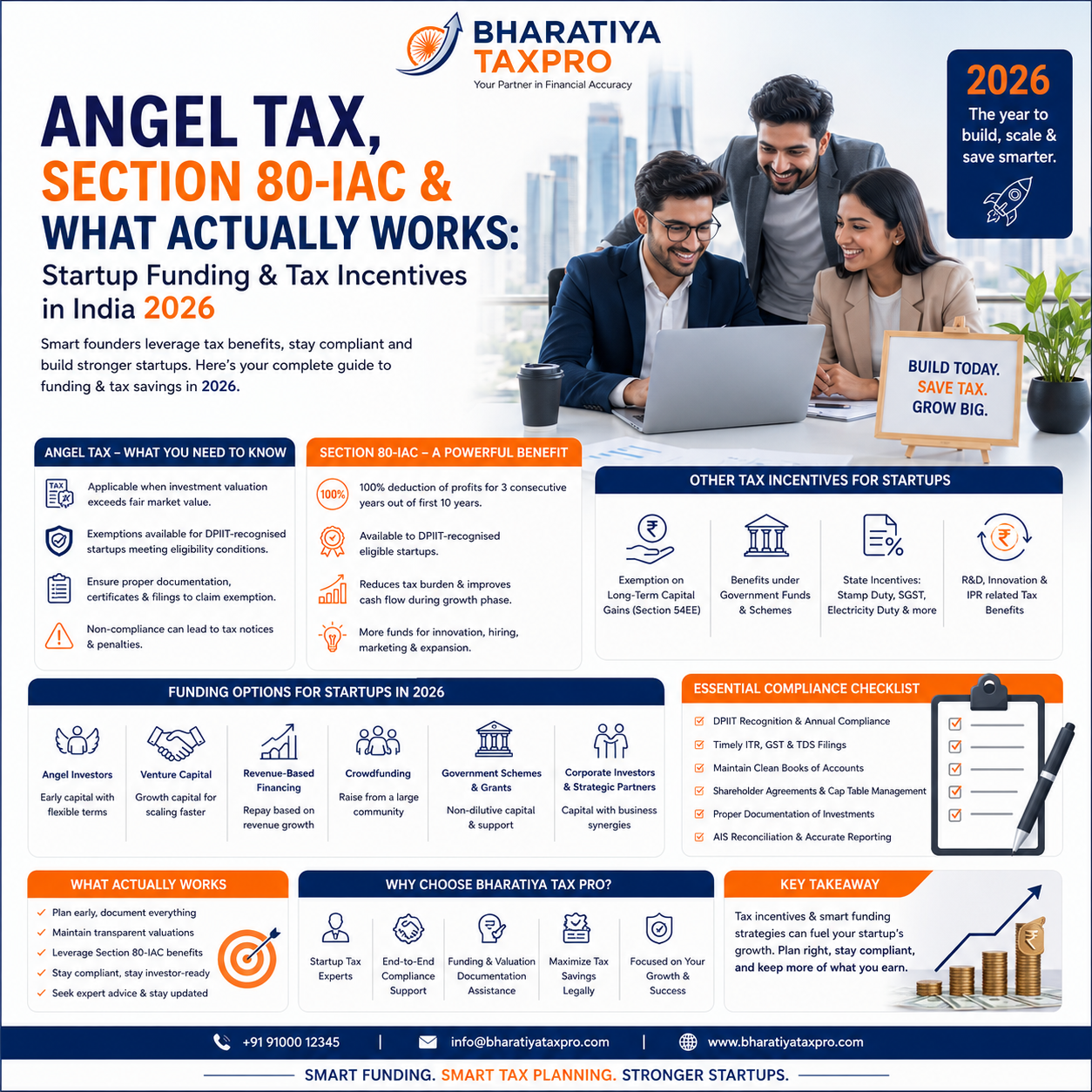
First, let us discuss Angel Tax, because that was historically a massive pain point. In basic terms, Angel Tax previously applied when your firm secured an investment at a valuation higher than the fair market value. Consequently, that difference was harshly taxed as income.
Many founders mistakenly believe they still need to fight for exemptions today. However, I have phenomenal news for you. The government completely abolished the Angel Tax for all classes of investors in the Union Budget 2024-25. This historic move was designed to bolster the Indian start-up ecosystem, boost the entrepreneurial spirit, and support innovation.
Therefore, you no longer need complex DPIIT exemption paperwork just to avoid this specific tax. As a result, early-stage financing is vastly more founder-friendly today. You can raise capital from venture funds or angel syndicates without this tax ruining your books.
Section 80-IAC: The Ultimate Growth Lifeline
While Angel Tax is gone, one of the most compelling tax features continues to be Section 80-IAC. This powerful provision allows qualifying startups to write off 100% of their profits. Specifically, you can claim this for three successive years during your first ten years of operation.
Think carefully about not paying corporate tax on your profits during those key growth years. The money you save can go right back into recruiting better staff. Furthermore, you can use it to develop your product or expand into new regions. For many of the startups I have worked with, this deduction has been a literal lifeline. Ultimately, it helped them survive the early loss-making phase and finally become profitable.
However, you must actually qualify. Your startup must be officially DPIIT-recognized as an innovative business. Furthermore, you must complete the proper application and paperwork. I constantly encourage founders not to treat this as just another form. Instead, view it as a strategic financial instrument.
To stay updated on changing DPIIT eligibility rules, smart founders regularly consult the latest corporate tax guidelines at Bharatiya Tax to monitor nationwide shifts.
The Changing Face of Startup Funding in 2026
There are more ways than ever to raise money today. For growth-stage enterprises, traditional venture capital is still the primary source of funding. However, many early-stage founders are now successfully raising funds through alternative routes. For example, they use angel networks, revenue-based financing, and crowdfunding platforms.
Consequently, the implications for equity dilution and tax treatment range heavily from route to route. The trick is to select the exact path that fits your specific stage.
Having the right corporate structure at the time of fundraising is tremendously crucial. Clean cap tables, fair values, and sound shareholder agreements instantly dazzle investors. Moreover, they make future compliance and exits much easier. Good legal and financial counsel early on almost always pays off in time and money.
Why Compliance Cannot Be Ignored
Compliance is another major issue that many entrepreneurs struggle with. Heavy funding brings high demands on timely filings and proper accounting. For instance, strict TDS deduction, GST compliance, and transparent reporting are absolutely non-negotiable.
The Annual Information Statement (AIS) and advanced data exchange across tax departments mean mismatches are found promptly. Founders who ignore compliance frequently pay the price in severe penalties.
The best founders I have worked with get solid mechanisms in place early. They actively collaborate with professionals who understand both the startup environment and tax rules. Therefore, this mitigates operational risk and promotes massive confidence with future investors.
Real-Life Founder Success Stories
The SaaS Turnaround: I remember one ambitious SaaS founder came to us after he raised a seed round. His books were heavily split across several messy spreadsheets. Furthermore, several tax filings were completely pending. We stepped in, cleaned everything up, and secured the correct 80-IAC incentives. Six months later, when he pitched to bigger investors, his flawless compliance record became a massive asset.
The Agritech Launchpad: Another client in the agritech field leveraged Section 80-IAC benefits and state government funding seamlessly. Consequently, the tax break provided them the essential runway to test their product in the field. Ultimately, they obtained the exact metrics they needed to raise their Series A round successfully.
Conclusion
Ultimately, tax incentives and funding options are highly important instruments. However, they function best when paired with solid execution and sound governance. The most successful founders treat their venture as a serious business from day one.
Regulations will inevitably continue to change. Therefore, staying current and engaging with strict compliance experts gives you a significant competitive advantage. As a founder, your job is to develop something significant while making sensible financial decisions.
If you are looking to raise funds or want to secure your legitimate tax benefits, we are here to help. At Bharatiya Tax Pro, we are far more than a simple tax filing company. We actively work with founders to design sensible, highly compliant structures that enable massive long-term growth.
Ready to strengthen your startup’s financial foundation? Reach out to the expert Chartered Accountants at Bharatiya Tax Pro today.
- 📞 Call us: +91 93802 22322
- 📧 Email: info@bharatiyataxpro.com
- 🌐 Website: https://bharatiyataxpro.com/
- ➡️ WhatsApp: https://wa.me/+918884048888
Here is to building something truly meaningful—and doing it the exact right way in 2026!