
For many business owners in India, receiving a tax audit notification feels like an unwanted distraction. However, with the right preparation and deep awareness of the process, tax audits can become manageable verification exercises.
Consequently, the Income Tax Department is heavily intensifying its digital reviews in 2026. They are actively deploying advanced data analytics and scanning the updated Annual Information Statement (AIS). Therefore, staying prepared is no longer optional for modern enterprises.
At Bharatiya Tax Pro, we have helped hundreds of firms successfully pass complex tax reviews. We specialize in robust bookkeeping and proactive compliance. Therefore, this complete guide provides practical insights so your firm can face departmental scrutiny with absolute confidence.
To stay aligned with nationwide regulatory shifts, business owners should continuously monitor Indian tax compliance updates alongside their local accounting workflows.
Understanding the True Purpose of a Tax Audit
First, you must understand why the tax department selects certain books for review. The primary objective is to verify the correctness of your declared income, business expenses, and claimed tax deductions.
Furthermore, the department checks that your books of account accurately reflect real-world transactions. They ensure everything conforms strictly to the provisions of the Income Tax Act. Consequently, knowing this exact purpose helps shift your mindset from a nervous defense to a structured, calm collaboration.
What Triggers an Income Tax Audit?
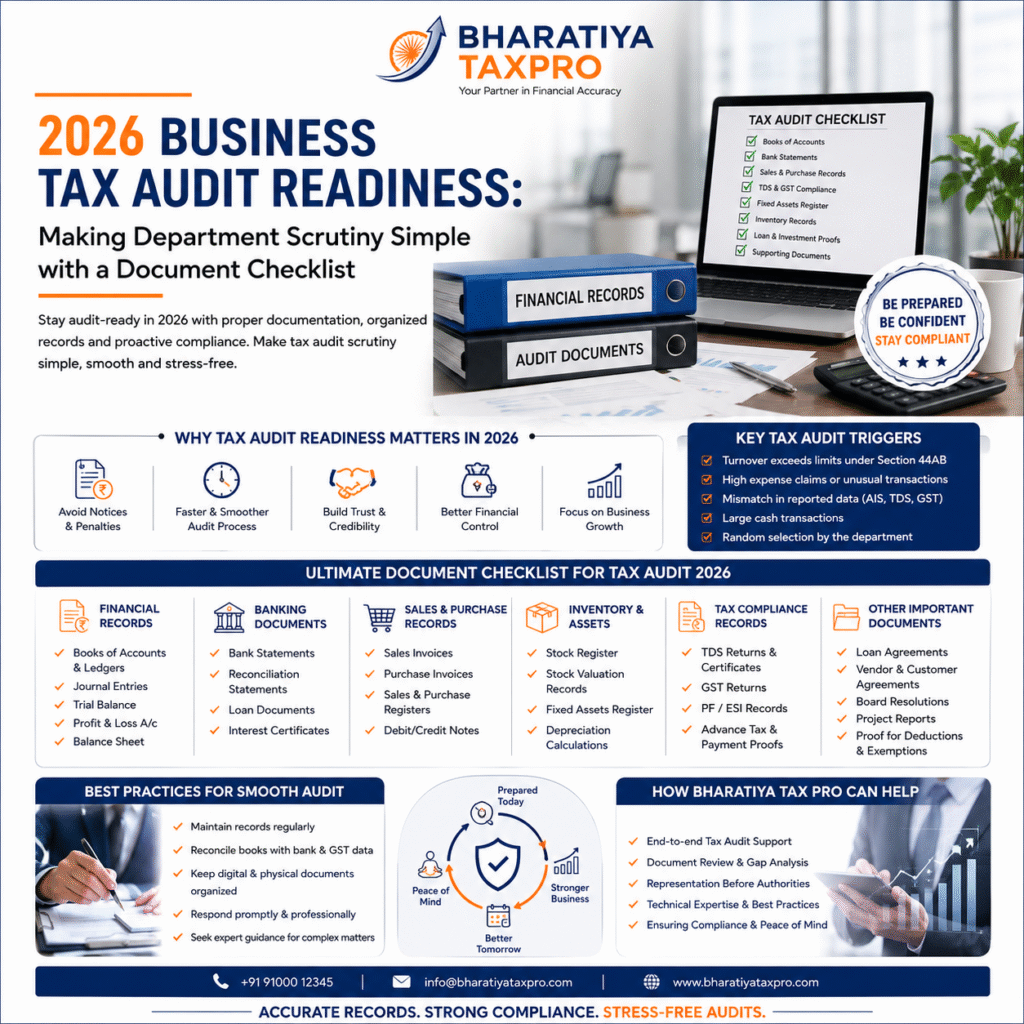
There are several common triggers that can put your business under the microscope. Understanding these parameters helps you mitigate exposure before returns are filed:
- Turnover Limits: A formal tax audit is legally mandatory for businesses whose total turnover crosses the thresholds established under Section 44AB.
- Data Inconsistencies: Digital algorithms automatically flag accounts showing high expense claims relative to total revenue.
- Cash Transactions: Large physical cash deposits or withdrawals instantly trigger automated flags.
- Industry Variances: Smaller enterprises are also at risk if their profit margins deviate significantly from established industry guidelines.
Therefore, maintaining consistent records throughout the year is the absolute secret to audit survival. You must never scramble at the last minute when an official notice arrives.
The Ultimate Tax Audit Document Checklist
When an assessing officer initiates a review, having an organized digital file is vital. Consequently, you must assemble this core documentation checklist immediately:
| Category | Required Documents & Evidence |
| Core Accounting Books | General ledgers, cash books, journal entries, and bank statements showing all incoming/outgoing cash flows. |
| Sales & Purchases | Complete sales and purchase registers matching your issued tax invoices and bills. |
| Inventory Records | Stock registers, year-end physical inventory sheets, and clear documentation of your stock valuation methodology. |
| Fixed Assets Register | Up-to-date asset logs showing new additions, deletions, and exact depreciation calculations. |
| Employee Payroll | Monthly payroll sheets, proof of timely TDS deduction, and regular PF/ESI compliance filings. |
| Legal Agreements | Signed vendor contracts, customer agreements, and formal board resolutions for major financial decisions. |
Special Areas Under Intense Departmental Scrutiny
1. Related Party Transactions
The tax department reviews transactions between related business entities with extreme care. For instance, they want to ensure all deals are executed strictly at arm’s-length pricing. Therefore, you must keep all legal agreements, supporting commercial invoices, and economic valuations completely transparent and accessible.
2. Cash Handling and Digital Auditing
The government is continually pushing to eliminate untracked cash from the commercial ecosystem. Consequently, physical cash transactions face intense inspection. You must maintain hard evidence for every single cash receipt or payment. Furthermore, large cash movements require a compelling business rationale documented clearly in your files.
3. GST and Input Tax Credit (ITC) Reconciliation
Mismatching data between your direct tax books and indirect tax filings is a primary cause for department notices. Therefore, regular monthly reconciliation of your input tax credit with your GST returns is a crucial shield against scrutiny.
How Technology and Professional Support Simplify the Process
Fortunately, modern technology has made achieving complete business tax audit readiness significantly easier for MSMEs. By deploying advanced accounting software with immutable audit trails and securely backing up data to the cloud, you can eliminate human error entirely.
Furthermore, seeking experienced professional help completely changes the dynamic of an audit. Qualified Chartered Accountants understand the tax department’s outlook, typical target areas, and the most efficient formats for formal submissions. They can draft technically flawless responses and handle communication with the assessing officer directly.
Ultimately, tax audit readiness is simply a reflection of the overall health of your business operations. When your books perfectly represent your daily activities, department scrutiny transforms from a nerve-wracking nightmare into a straightforward verification loop.
➡️ Take absolute charge of your corporate tax compliance today.
If you need expert assistance with tax audit preparation, document organizing, or tailored compliance solutions, get in touch with the team at Bharatiya Tax Pro.
- 📞 Call us: +91 93802 22322
- 📧 Email: info@bharatiyataxpro.com
- 🌐 Website: https://bharatiyataxpro.com/
- ➡️ WhatsApp: https://wa.me/+918884048888
Build a stronger, more resilient foundation for your business success with a reliable tax partnership!