
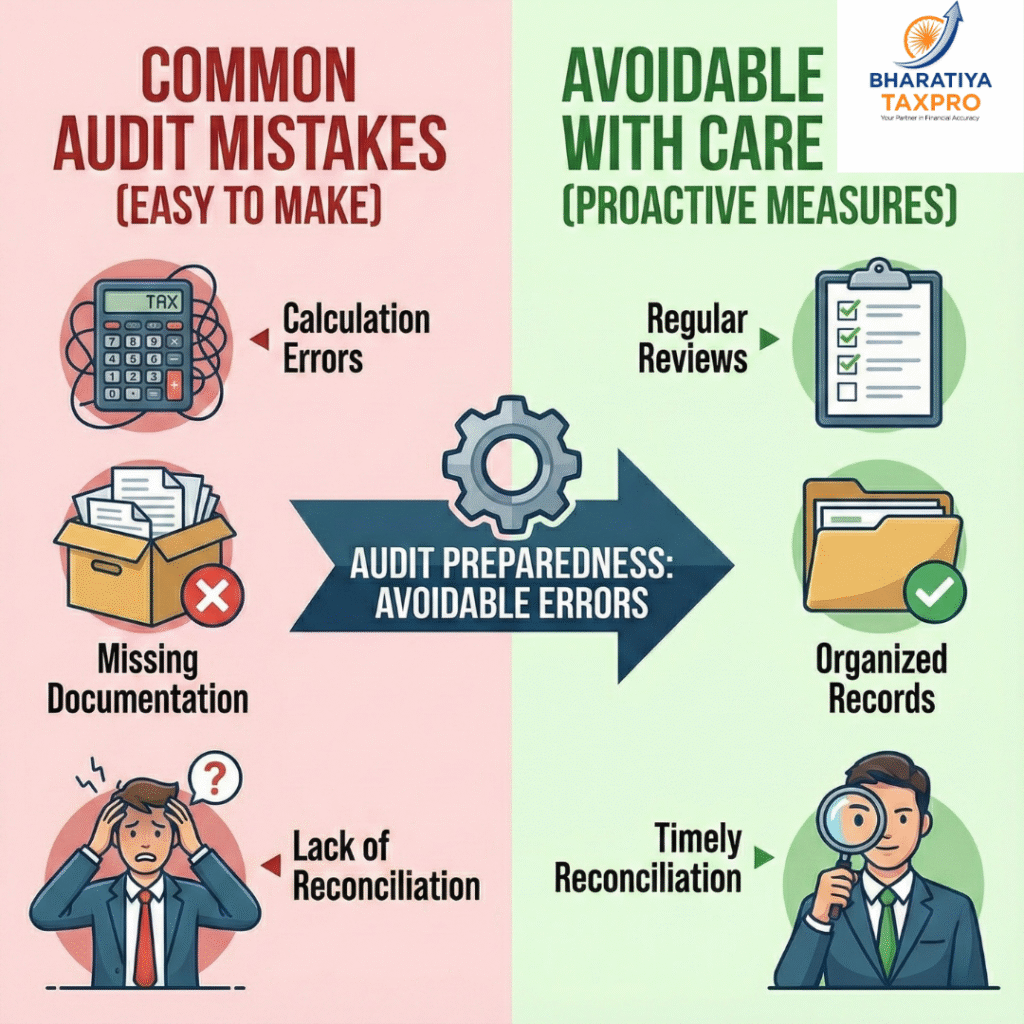
Digital GST, or GST 2.0, unifies all India’s GST transactions. Each piece of paper is a digital invoice stored in the government’s database, and more than just paper: invoices are cross-referenced to ensure they match.
Reports from Bharatiya Tax Pro indicate businesses in Bangalore tend to retain the outdated “old school” style. Regardless of whether it involved negligence, they are all treated equally, sending an auditor’s red flag.
To avoid the system flagging you, consider correcting the following billing mistakes.
1. HSN Code Mistake (4 or 6 Digits)
For HSN (Harmonized System of Nomenclature) Codes, rule changes kick in 2025-2026.
- The Rules: 6-digit HSN codes are mandatory for all businesses with a turnover of more than ₹5 Crores.
- The Mistake: Disadvantaging themselves to the tax net by using an incorrect or purely generic 4-digit code.
- The Audit Trigger: Automated audit trigger for the flagging of “HSN Mismatches”. If your HSN code indicates you sell “Steel” (18%), but your tax indicates 12%, an automated notification is more than likely.
2. The “30-Day” Reporting Delay
The 2025 changes included the first 30-day mandatory reporting period for e-invoices.
- The Rule: You must report invoices to the portal within 30 days.
- The Mistake: Issuing an invoice today and then filing it next month to generate the IRN (Invoice Reference Number).
- The Consequence: If the IRN isn’t generated within 30 days of the invoice date, the invoice is void, and your buyer will lose their Input Tax Credit (ITC).
- The Audit Trigger: You will be marked for “Delayed Reporting,” which is a primary trigger for a departmental audit.
3. Non-Sequential Invoice Numbering
It might appear simple, but it is a critical element of compliance.
- The Rule: At the beginning of each financial year, you must establish a new, unique, and sequential numbering series (for instance, BTP/25-26/001).
- The Mistake: Leaving gaps within your series (like 001, 002, and 005).
- The Audit Trigger: Missing numbers give the impression of “Off-the-books” sales. Auditors analyze your sequence gaps to pinpoint unaccounted revenue.
4. Mistake in Tax Type: IGST vs. CGST/SGST
This is the most frequent oversight in the service sector in the fast-paced city of Bangalore.
- The Rule: For interstate supply under ‘Place of Supply’, IGST applies if the customer is outside Karnataka. It is CGST + SGST if the customer is within Karnataka.
- The Mistake: Thinking “It’s all 18% anyway,” and charging 18% IGST to a local client.
- The Audit Trigger: You cannot “balance” one against the other. If it is IGST instead of CGST/SGST, the department will claim that the tax must be paid correctly (with interest), and the incorrect amount can be refunded.
5. Not Flagging Reverse Charge (RCM)
Some services, such as legal fees from an advocate or services provided by a Goods Transport Agency (GTA), are subject to Reverse Charge.
- The Mistake: Not checking the “Tax payable on Reverse Charge” tick box on your invoice and/or not paying this tax in cash.
- The Audit Trigger: Because the government relies on the receiver to make the payment, any mismatch between your expense records and your RCM declarations is an instant red flag.
The Cost of a Billing Mistake
According to Section 122 of the CGST Act, there is a penalty for issuing an incorrect or false invoice of:
- ₹10,000 OR the tax evaded amount (whichever is greater).
- For continuous procedural oversight, a general penalty of up to ₹25,000 is applicable.
Want To Protect Your Business While Working With Taxes?
At Bharatiya Tax Pro, we believe our clients shouldn’t have to become tax specialists to issue an invoice. We help our clients automate compliance to maximize sales.
- Invoice Audits: We conduct monthly sales register “Spot Checks” to review HSN and Tax Rate discrepancies.
- ERP Integration: We help you customize your billing software (Tally, Zoho, etc.) to ensure you don’t skip a sequence or select the wrong tax.
- Vendor Verification: We verify your customers’ GSTINs before you invoice them, helping avoid future ITC disputes.
We have over 40 years in the business, watching GST adapt and evolve from a new concept into a sophisticated tool. We ensure that your billing systems remain up to date and in line with current laws.
Would you consider your invoices to be “Audit-Proof”? For a Billing Health Check, reach out to Bharatiya Tax Pro to ensure your business documentation is fully compliant.
➡️ Book your appointment by visiting our website: https://bharatiyataxpro.com/
➡️ WhatsApp: https://wa.me/+918884048888